| Rock Strength/UCS | Less than 5 000 psi/<35 mpa | 3000-10000 psi/20-79 mpa | 8000-14000 psi/55-100 mpa | Very soft-soft, <10 000 psi/<83 mpa | Soft-medium hard rock, 6 000-10 000 psi/41-207 mpa | Medium hard rock, 24 000-44 000 psi/166-303 mpa | Hard rock, 38 000-60 000 psi/262-400 mpa |
| Weight on Bit | 1000 to 4000 (lbs/inch of bit diameter) | 3000 to 6000 (lbs/inch of bit diameter) | 4000 to 7000 (lbs/inch of bit diameter) | 1000 to 4000 (lbs/inch of bit diameter) | 3000 to 6000 (lbs/inch of bit diameter) | 4000 to 7000 (lbs/inch of bit diameter) | 5000 to 9000 (lbs/inch of bit diameter) |
| Application | Large widely spaced teeth with interruptions, removals and deletions on gage.
Full tooth hard facing in both sealed and open bearing configurations.
Primary application is water well drilling.
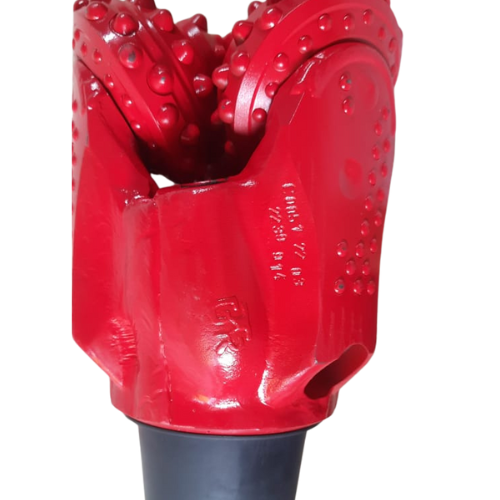
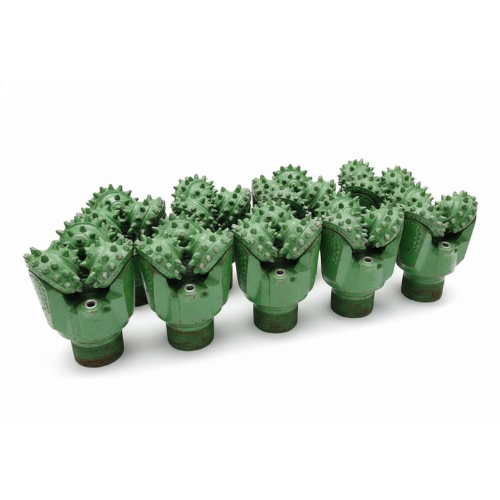
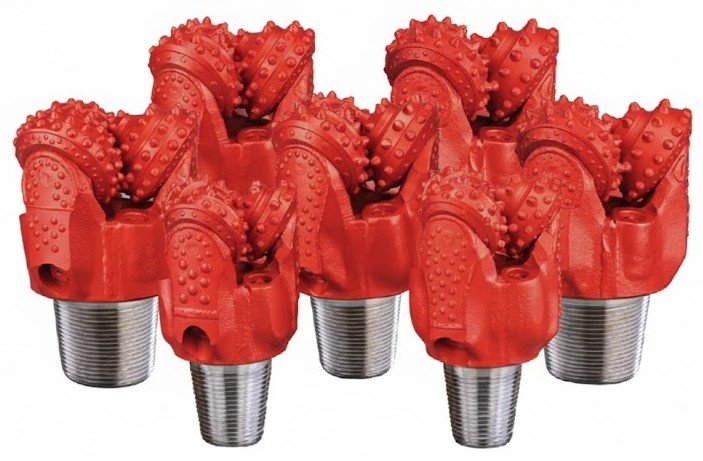
| More teeth and rows than F1 class bits. Teeth are smaller and shorter, with larger included angle for strength. Similar hard facing to F1 class bits, except no hard facing on lead side of teeth. Available in sealed and open bearing configuration. Primary application is water well drilling. | Short, small closely spaced teeth for maximum bottom hole coverage. Tooth hard facing only on gage and spear point. Maximum gage protection with optional carbide inserts.
Available in sealed and open bearing configurations. Primary applications are water well and oil field workover.
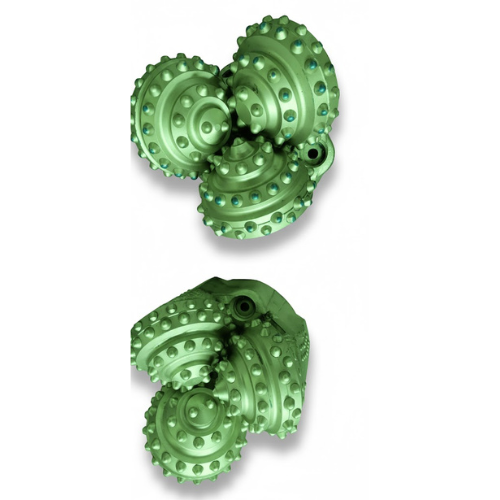
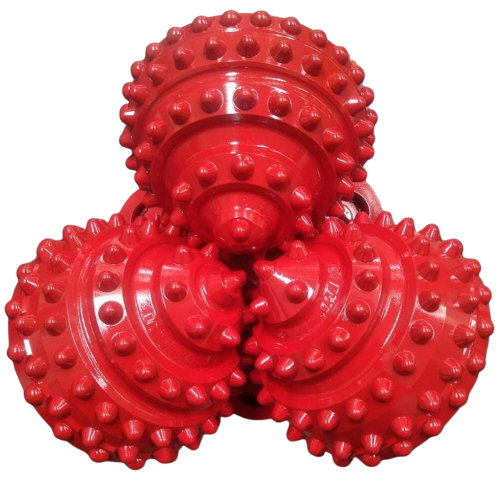
| Super scoops, long conical inserts with sharp points are widely spaced for aggressive drilling and very high ROP at <100 m/hr. Typically used for coal overburden in formations like
sandstone, siltstone, shale, limestone, alluvium, highly altered volcanic and schists.
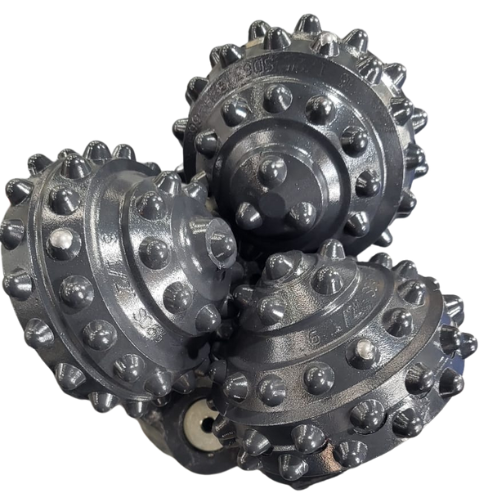
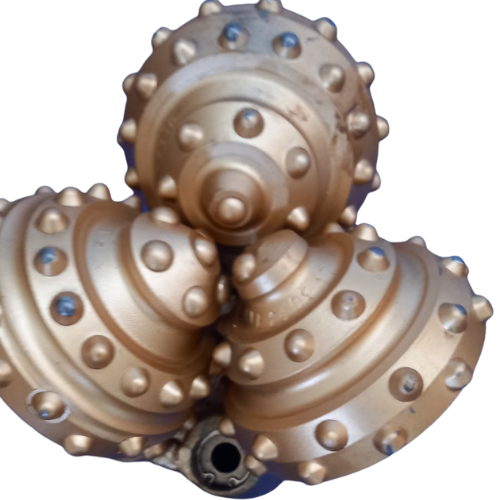
| Chisel, conical inserts with blunt points and medium projection are moderately spaced for aggressive drilling and good penetration. Typically used for hard coal overburden in formations like volcanic rocks (rhyolite, dacite, andesite, etc.), copper porphyry, granite, diabase and “low grade” metamorphic rocks. | Conical, ogive, some chisel inserts with blunter points and shorter projections are closely spaced on increased number of rows per cone. Typically used in formations like volcanic rocks (rhyolite, dacite, andesite, etc.), hard limestone, hard shale, quartzite, granodiorite, granite, diabase, diorite, skarn, taxite and medium grade metamorphic. | Strong conical, ogive inserts with short projections are densely packed. Typically used in formations like taconite, quartzite, banded iron formations and high-grade metamorphic rocks like skarns, taxite, hornfels, etc. |






Reviews
There are no reviews yet.