
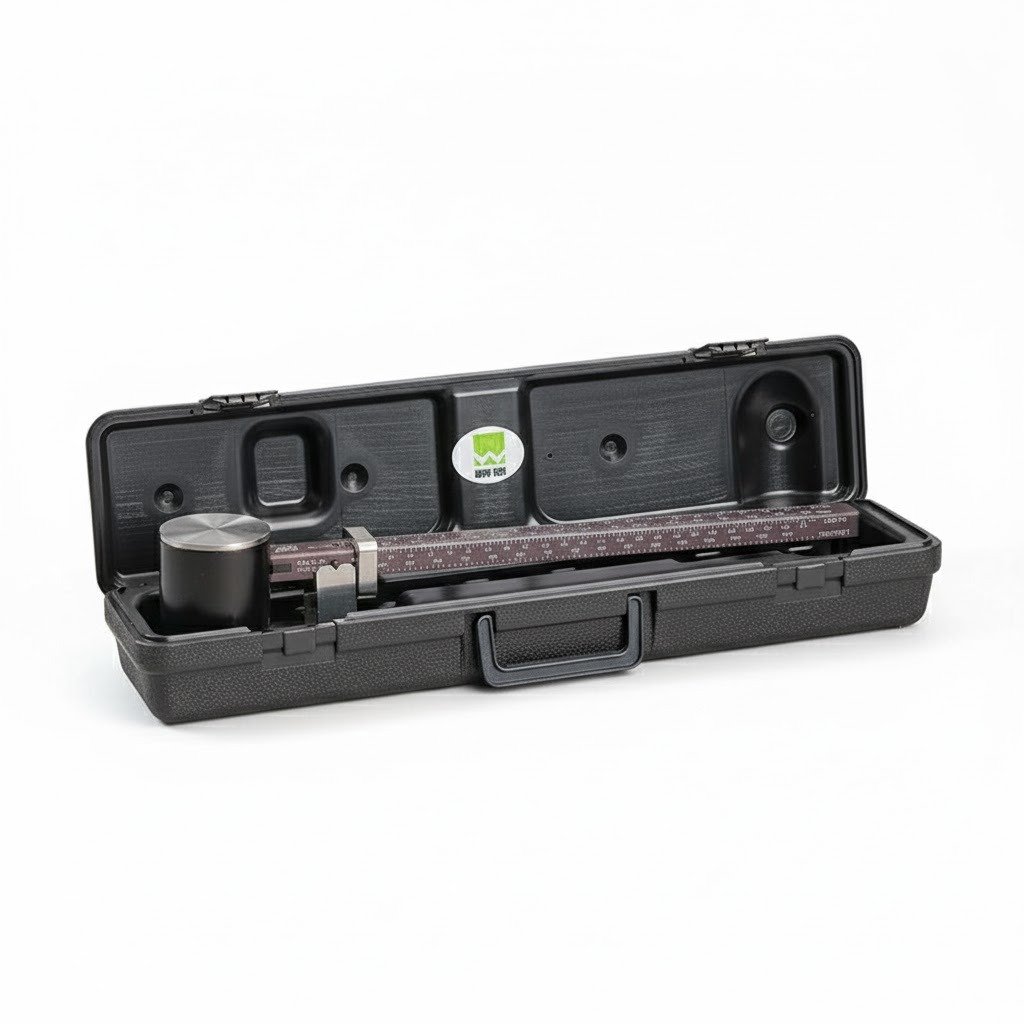
Description
Mud Weight is Critical for HDD Stability
Maintaining the correct mud weight is the core principle of wellbore stability in any drilling operation, particularly in the long, low-angle boreholes of HDD.
- Borehole Collapse Prevention: The column of drilling fluid exerts hydrostatic pressure on the borehole walls. If the mud weight is too low, the hydrostatic pressure will be insufficient to counteract the weight of the surrounding soil/rock, leading to borehole collapse (sloughing).
- Fracture Prevention (Fluid Loss): If the mud weight is too high, the hydrostatic pressure may exceed the rock’s fracture pressure, causing the drilling fluid to be rapidly lost into the formation—a condition known as lost circulation or hydro-fracturing.
- Cuttings Management: The density of the mud also aids in the suspension and transport of heavy drill cuttings, though viscosity is the primary driver.
We provide high-precision Mud Balances that ensure accurate ppg readings, giving your mud engineers the reliable data needed to maintain the critical mud weight window and prevent costly drilling failures in your Horizontal Directional Drilling projects.






Reviews
There are no reviews yet.