
Description
⭐ Key Features for Mud Handling
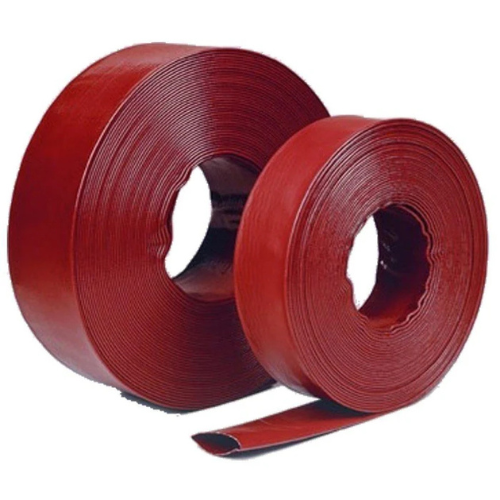
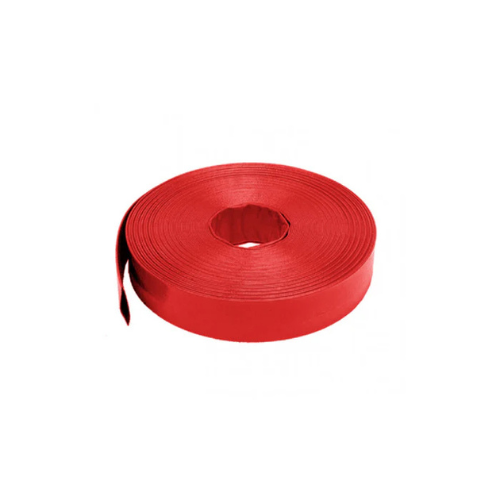
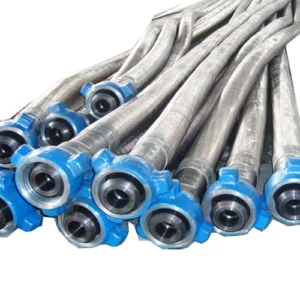
Unlike the high-pressure hose that goes downhole, these hoses are built for flexibility, durability against dragging, and maximizing volume at lower pressures.
- Superior Abrasion and Suction Capability
- Inner Tube Resilience: Constructed with specialized internal rubber compounds (often SBR or NBR) that are highly resistant to the abrasive effects of sand, rock fines, and solids found in returned drilling mud.
- Full Vacuum Rating: When used on the suction side of transfer pumps, the hose is reinforced with a rigid internal helix wire to prevent collapse under full vacuum conditions.
- Durability and Environmental Resistance
- Rugged Outer Cover: The cover is engineered to withstand the toughest on-site conditions, including dragging over concrete, dirt, and rock, as well as exposure to UV rays, ozone, and external oil spills.
- Extreme Flexibility: Despite its robust build, the hose remains highly flexible, allowing for easy routing, coiling, and connection between units that may be positioned at different angles or distances (e.g., connecting a recycling unit to a mud tank).
- Critical Applications in the Surface Loop
| Application | Function | Key Benefit |
|---|---|---|
| Mud Recycling & Solids Control | Transfers spent mud from the shale shaker or pits to the recycling unit (e.g., hydro cyclone feed). | Maintains high flow rates for maximum mud cleaning efficiency. |
| Water Supply & Mixing | Supplies clean water from bulk tanks (or frac tanks) to the mixing hopper. | Allows for fast batch mixing to maintain ideal mud rheology. |
| Pump Suction/Discharge | Used as the main suction or discharge line for transfer pumps moving mud between storage tanks. | Prevents collapse under vacuum and handles the full volume of the pump. |





Reviews
There are no reviews yet.